


Starting a business is an exciting journey, but ensuring its legal protection is just as important as its growth. Many entrepreneurs mistakenly believe that registering a company automatically protects their brand name and logo. However, company registration and trademark registration serve entirely different purposes.
Registering a company legally establishes your business, while registering a trademark safeguards your brand identity. Both are crucial for long-term business success, but they protect different aspects of your business. This article explains their differences and why securing both is essential for Sri Lankan businesses.
What Is Company Registration?
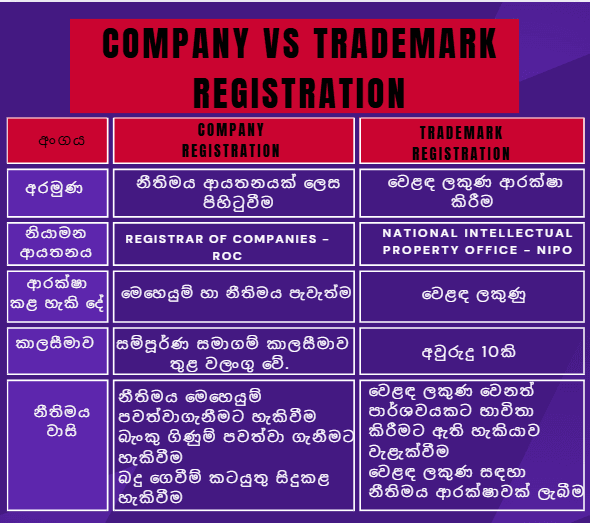
Company registration is the legal process of incorporating a business under the Companies Act No. 7 of 2007 in Sri Lanka. This step creates a separate legal entity, meaning the business operates independently of its owners. Once registered, a company can: ✅ Conduct business legally ✅ Open corporate bank accounts ✅ Enter into contracts ✅ Register for tax obligations ✅ Limit the liability of owners and shareholders
The Registrar of Companies (ROC) in Sri Lanka oversees company registrations. Registering your business with the ROC ensures that your company is legally recognized and can operate within government regulations.
What Is Trademark Registration?
Trademark registration is the process of legally protecting a brand’s identity, ensuring that no one else can use a similar name, logo, or symbol. This falls under Intellectual Property Act No. 36 of 2003 and is managed by the National Intellectual Property Office (NIPO) of Sri Lanka.
A trademark is a unique sign that distinguishes one business’s products or services from another.
What Can Be Registered as a Trademark?
A trademark can consist of:
- Brand names
- Logos and symbols
- Slogans and taglines
- Letters, numbers, and combination or arrangement of colours and shapes of goods or containers
- Geographical indications Registering a trademark gives its owner exclusive rights to use, assign, and license it. More importantly, it prevents others from using a deceptively similar mark that may confuse customers.
If someone copies your registered trademark, you can take legal action in civil or criminal courts to stop the infringement and claim damages.
Marks That Cannot Be Registered Marks that are not intended to be distinguishable can be registered under Sections 103 and 104 of the Intellectual Property Act No. 36 of 2003. A mark may be indistinguishable if: 🔹 It is descriptive of the goods or services it represents 🔹 It is indistinguishable from the goods or services of other businesses 🔹 It is deceptively similar to an already registered or well-known trademark To ensure strong legal protection, a trademark must be unique and clearly identifiable from others in the same industry.
Key Differences Between Company Registration and Trademark Registration
Why You Need Both Company Registration and Trademark Registration
By securing both company registration and trademark registration, you can: ✅ Ensure your business is legally recognized ✅ Protect your brand’s unique identity ✅ Strengthen customer trust and market presence
How Talentspark Consulting Can Help
At Talentspark Consulting, we specialize in Company Registration and Trademark Registration in Sri Lanka. Whether you’re starting a new business or want to secure your brand identity, our experts will guide you through the entire process hassle-free. 📞 Call us today to get started! 💡 Don’t just build a business—protect it! Register your company and trademark today.
Final Thoughts
Registering your company is just the first step in building a strong business. To fully protect your brand and reputation, trademark registration is equally important. By securing both, you can avoid legal complications and establish long-term credibility in your industry.
